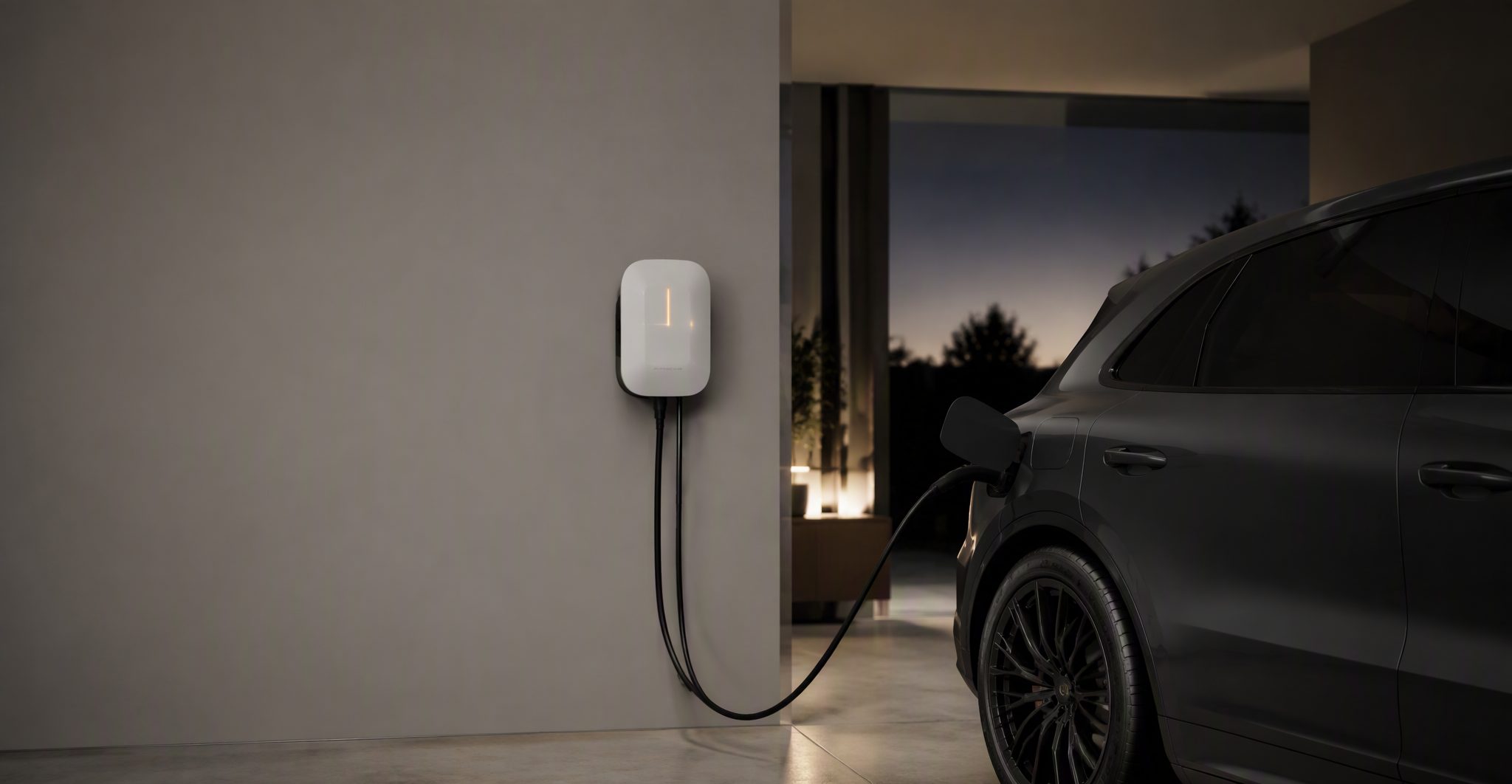
Nashville · Franklin · Brentwood · Williamson County
Home EV Charger Installation in Middle Tennessee
Upgrade to fast, convenient Level 2 charging at home. Professional installation for Tesla and most major EV charging systems.
- Level 2 Charging
- Tesla Wall Connectors
- 240V Circuits
- Panel & Load Evaluations
Why Level 2 at home
Wake up fully charged.
Public charging works — until it doesn’t. A professionally installed Level 2 charger turns your garage into your own charging station: plug in when you get home, unplug with a full battery in the morning. No detours, no waiting, no watching an app for an open stall.
Compared with the standard 120V outlet in your garage, a dedicated 240V Level 2 circuit can dramatically reduce charging time — the difference between adding a few miles overnight and refilling your battery while you sleep.
Standard 120V outlet
Slow trickle charging. Fine for a plug-in hybrid — frustrating as the primary way to charge a full EV.
Level 2 · 240V
Significantly faster home charging on a dedicated circuit sized to your vehicle and charger.
Actual charging speed depends on your vehicle, charger, circuit amperage, and electrical system — we size the installation to get the most your setup can safely deliver.
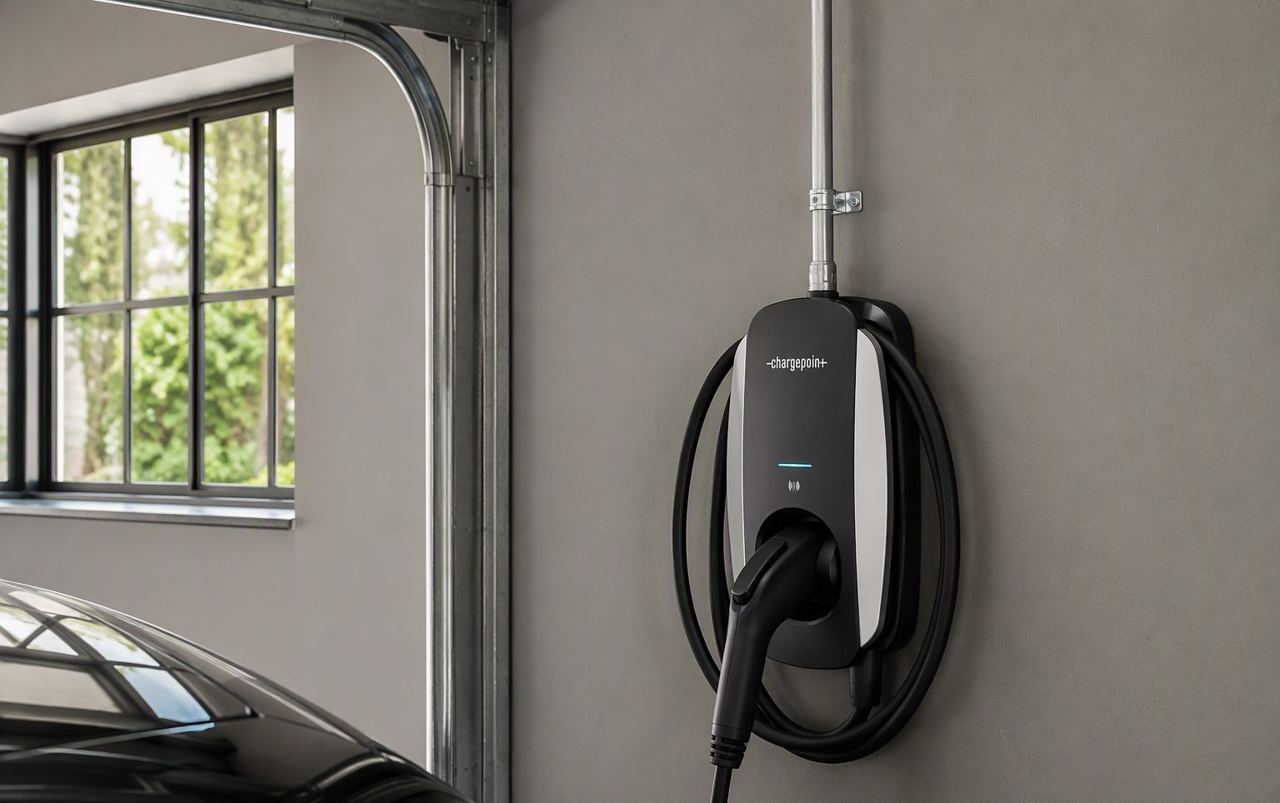
EV chargers we install
Your charger. Installed correctly.
Already bought your charger? We can install it. Need help choosing one? We can help determine what works with your vehicle and electrical system — before anything is purchased or drilled.
Call to talk through your chargerTesla Wall Connector
Tesla’s hardwired or plug-in home charger, installed on a correctly sized dedicated 240V circuit and commissioned for your vehicle.
Universal Level 2 Chargers
J1772 and NACS-compatible home chargers matched to your vehicle — Tesla, Rivian, Ford, Hyundai, Kia, BMW, Mercedes, Lucid, and more.
NEMA / 240V Circuits
Properly sized circuits, breakers, wiring, conduit, and disconnects — including NEMA 14-50 outlets for plug-in charging setups.
ChargePoint
Home Flex and compatible ChargePoint units installed with the circuit amperage the equipment is designed for.
Emporia
Emporia EV chargers, including load-management configurations that can avoid a panel upgrade on capacity-limited homes.
Wallbox
Wallbox Pulsar and compatible units, mounted cleanly with wiring routed to look intentional in finished garages.
Other Compatible Chargers
Already bought something else? If it’s a listed, code-compliant EVSE, we can almost certainly install it correctly.
Manufacturer names identify the equipment we install — not partnerships or endorsements.
For Tesla owners
Tesla Wall Connector installation in Nashville
A Wall Connector is only as good as the circuit behind it. We handle the full installation for Tesla owners across Nashville, Franklin, and Brentwood — from the panel to the charger to the first charge.
01
Wall Connector mounting
Positioned where the cable reaches your charge port naturally — no draped cables across the garage floor.
02
Dedicated circuit sizing
The circuit is sized to the Wall Connector’s configuration and your vehicle, not guessed from a template.
03
Breaker installation
A correctly rated two-pole breaker installed in your panel, matched to wire gauge and charger settings.
04
Wiring & conduit
Neatly routed wiring and conduit that look intentional — especially in finished garages.
05
Panel capacity evaluation
We verify your service and panel can support the load before recommending any changes.
06
Commissioning & testing
Charger configured, output verified, and your Tesla charging before we leave.
We install Tesla equipment as independent EV charging specialists. Tesla and Wall Connector are trademarks of Tesla, Inc.; their use here describes the equipment installed, not an affiliation.
The installation process
Four steps. One phone call starts it.
Installing a home charger is simpler than most homeowners expect. You don’t need to know your panel’s amperage or your charger’s specs — that’s our side of the conversation.
Call (615) 543-8826 and tell us what you drive.
01
Call us
Tell us your EV, your charger, and where you want it installed. A short conversation is usually enough to know what your home needs.
02
Panel review
We evaluate your panel, available electrical capacity, charger location, and the wiring route — so the recommendation fits your home.
03
Installation
The circuit, charger, wiring, breaker, and related equipment are professionally installed, cleanly and to code.
04
Start charging
We test the system and get your vehicle charging before we leave. That night, you plug in at home for the first time.
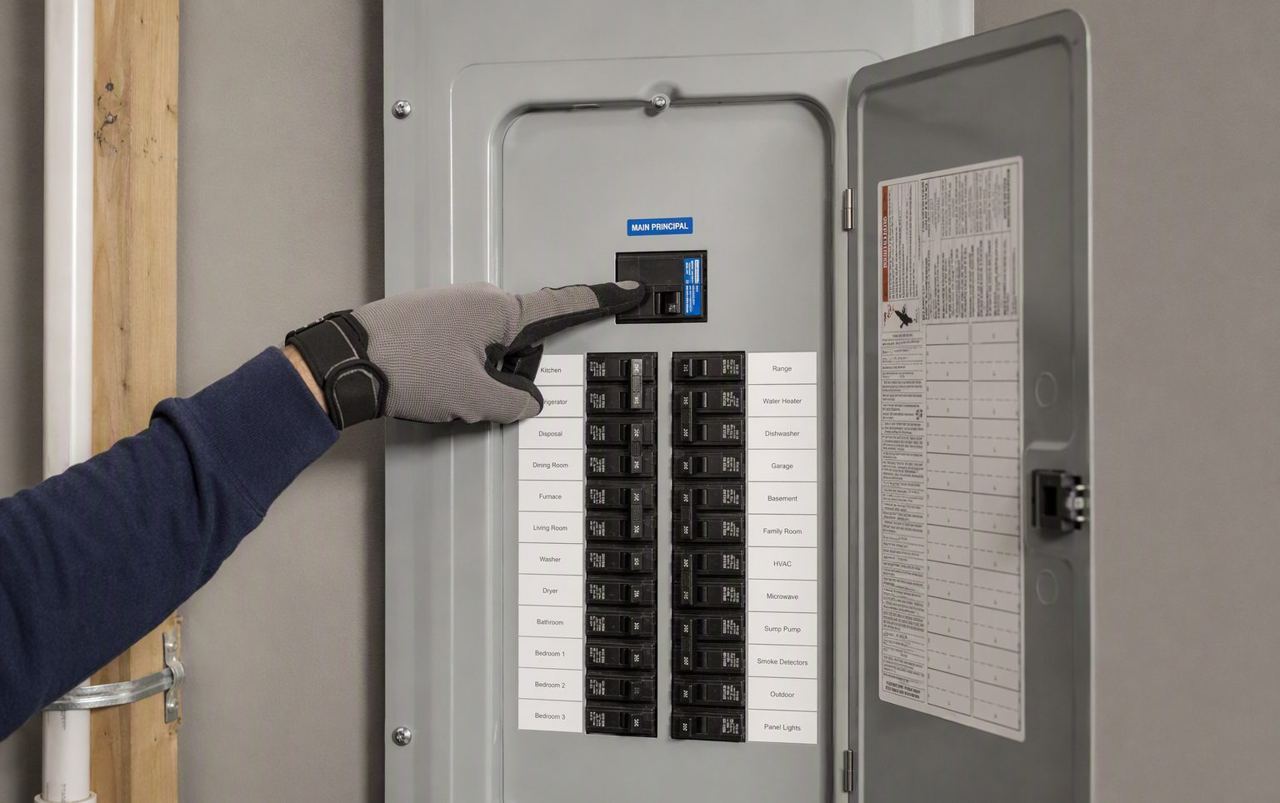
Panel & load evaluation
Can my electrical panel handle an EV charger?
Often, yes — and more often than homeowners are told. Many homes can support Level 2 charging without replacing the entire electrical service. Where capacity is tight, load-management equipment can share power intelligently instead of forcing an upgrade.
What we won’t do is sell you a panel upgrade before evaluating the system. A proper evaluation looks at the whole picture first:
- Existing electrical load
- Service size
- Panel capacity
- Charger amperage
- Available breaker space
- Your charging requirements
- Load-management options
If an upgrade is genuinely the right answer, we’ll tell you why and what it involves. If a right-sized circuit or load management solves it for less, that’s what we’ll recommend.
Have Us Check Your PanelLocal service area
Local EV charger installation across Nashville & Williamson County
We work where we live. From Green Hills to Spring Hill, we install home charging for homeowners across Middle Tennessee — and we know the housing stock, from new construction to older panels that need a careful look.
Also serving Thompson’s Station, Bellevue, Green Hills, Belle Meade, Forest Hills, Berry Hill, and surrounding Middle Tennessee communities. Not sure if you’re in range? Call and ask.
Why choose us
A specialist, not a generalist with a van.
01
EV charging focused
We install EV charging equipment every day — we understand the equipment, the electrical requirements, and modern vehicle charging systems. This isn’t a side service.
02
Clean installations
Equipment, conduit, wiring, and mounting should look intentional — especially in premium garages. We install like the work will be looked at, because it will be.
03
Right-sized solutions
We evaluate the home and the vehicle before recommending a circuit size or any upgrade. No default upsell, no template answers.
04
Local service
Serving Nashville, Franklin, Brentwood, and surrounding Williamson County communities. You reach the people who do the work, not a call center.
Common questions
EV charger questions, answered straight.
The honest answer to most electrical questions is “it depends on your home.” Here’s what actually matters — and a call gets you an answer specific to your panel and vehicle.
How much does it cost to install an EV charger in Nashville?
Cost depends on the charger, the distance from your electrical panel, the circuit size required, and whether your panel has available capacity. A straightforward garage installation near the panel costs less than a long wiring run or one that requires load-management equipment. Call us with your vehicle, charger, and panel location and we can give you a realistic range before any work is scheduled.
Do I need a 200-amp electrical service for an EV charger?
Not necessarily. Many homes with 100-amp or 150-amp service can support a Level 2 charger, depending on existing electrical load, the charger amperage, and whether load management is used. We evaluate your actual service size, panel capacity, and household load before recommending anything — a service upgrade is only suggested when it is genuinely needed.
Can you install a Tesla Wall Connector?
Yes. We install Tesla Wall Connectors on properly sized dedicated 240V circuits, including breaker installation, wiring and conduit, mounting, panel capacity evaluation, and commissioning. We install Tesla equipment as EV charging specialists; manufacturer names are used to describe the equipment we work with, not to imply any manufacturer endorsement.
Can I use a 240V outlet instead of a hardwired charger?
Often, yes. A NEMA 14-50 or similar 240V outlet on a dedicated circuit lets you plug in a portable or plug-in charger. Hardwiring can support higher amperage on some chargers and removes the plug connection entirely. The right choice depends on your charger, your vehicle, and how you plan to use it — we can walk through both options.
What size breaker does an EV charger need?
It depends on the charger. EV charging is a continuous load, so the circuit and breaker must be sized above the charger’s actual draw — commonly a 40A to 60A breaker for many home chargers, but the correct size is determined by the charger specifications, wiring, and electrical code. We size every circuit to the specific equipment being installed.
Can I install a Level 2 charger in my garage?
Yes — the garage is the most common location. We evaluate where your vehicle parks, where the panel is, and the cleanest wiring route, then mount the charger where the cable comfortably reaches your charge port. Exterior installations are also possible with appropriately rated equipment.
How long does EV charger installation take?
A typical installation is completed in a single visit, often within a few hours. Longer wiring runs, panel work, or load-management equipment can add time. After the panel review we can tell you what your specific installation involves before work begins.
Can my existing electrical panel handle an EV charger?
Often it can. The answer depends on your service size, existing household load, available breaker space, and the amperage your charger needs. Many homes can add EV charging without replacing the panel, and load-management devices can allow charging even when spare capacity is limited. We evaluate first and recommend the most practical option.
Do EV chargers need a dedicated circuit?
Yes. A Level 2 EV charger should be on its own dedicated 240V circuit with a properly sized breaker and wiring. Sharing a circuit with other loads is not appropriate for continuous EV charging and does not meet electrical code requirements.
Can you install the charger I already purchased?
Yes. If you have already bought a charger — Tesla Wall Connector, ChargePoint, Emporia, Wallbox, or another compatible unit — we can install it on a correctly sized circuit. If you have not chosen one yet, we can help you determine what works with your vehicle and electrical system.
Should my EV charger be hardwired?
Hardwiring is a good option for many homeowners: it allows higher amperage on some chargers, avoids a plug-and-receptacle connection, and gives a clean permanent installation. A 240V outlet offers flexibility if you may move or swap chargers. We recommend based on your charger, vehicle, and plans.
Can an EV charger be installed outside?
Yes, with outdoor-rated equipment and proper weather protection. Many chargers carry outdoor ratings, and we install appropriate conduit, fittings, and mounting for exterior locations. If your vehicle parks in the driveway, an exterior installation can still be clean and code-compliant.
Get a quote
Tell us about your setup.
A few details about your vehicle, charger, and home are enough for a realistic quote. Prefer to talk? Calling is faster:
Call (615) 543-8826Typical reply: same business day
Nashville · Franklin · Brentwood · Williamson County
Ready to charge faster at home?
Call today to discuss your EV, charger, and home electrical setup.